

If your horse or pony is an "easy keeper" who gains weight on air, has a cresty neck, or has had a bout of laminitis, there's a good chance insulin is at the heart of it.
Equine Metabolic Syndrome (EMS) and insulin resistance are among the most common — and most manageable — problems in modern horses. The single biggest lever you have is diet. This guide covers how to feed an EMS or insulin-resistant horse to lower their laminitis risk and get them back to a healthy weight.
What is EMS and insulin resistance?
Insulin resistance (insulin dysregulation) means the body's cells stop responding normally to insulin, so the horse pumps out more and more of it to manage blood sugar. Equine Metabolic Syndrome is the bigger picture: insulin dysregulation, a tendency toward obesity (often with abnormal fat pads and a cresty neck), and a high risk of laminitis.
It overlaps with — but isn't the same as — Cushing's disease. Many older horses have both. If your horse is also showing a long coat that won't shed or muscle loss, read our companion guide on feeding a horse with Cushing's (PPID), because the two are managed hand in hand.
The laminitis connection — why this matters so much
Here's the part every EMS owner needs to take seriously: persistently high insulin directly triggers laminitis. This isn't a vague risk — it's the mechanism. Laminitis is painful, can be career- or life-ending, and often strikes after a sugar spike (a flush of spring grass, a bucket of the wrong feed). Everything below is really about keeping insulin low enough to protect the feet.
Step 1: Get the weight off
Obesity drives insulin resistance, and weight loss is the most powerful "treatment" there is. Most EMS horses need fewer calories, not more.
- Body-condition score monthly. Learn the 1–9 scale and aim to bring an overweight horse down gradually. A weigh tape every couple of weeks keeps you honest.
- Cut the calories that add nothing. Drop grain and high-calorie treats first — they're pure risk for an EMS horse.
- Keep them moving. Exercise (as your vet allows, and never on laminitic feet) improves insulin sensitivity on its own.
Step 2: Low-sugar forage & the grazing-muzzle question
Forage is the foundation — but for an EMS horse it has to be low in sugar and starch (low NSC, ideally under ~10%).
- Test your hay and choose low-NSC batches. Soaking hay for 30–60 minutes lowers sugar by roughly 20–30%.
- Grass is the classic trap. Pasture sugar spikes in spring, autumn, on sunny days, and after frost. A grazing muzzle, a track/dry-lot system, or turnout only in the early morning can dramatically cut intake while still letting them move and forage.
- Use a slow feeder so restricted forage lasts longer — trickle-feeding keeps the gut healthy and the horse calmer.
Step 3: Targeted supplements that support insulin health
Supplements don't replace weight loss and low-sugar forage — but the right ones support the metabolic machinery while you do the work.
Magnesium & chromium
These minerals are the classic pair in metabolic-horse diets for their role in supporting normal glucose and insulin function. Many EMS horses are marginal in magnesium.
Omega-3 fatty acids
Omega-3s support a healthy inflammatory balance — relevant when insulin and inflammation are running high.
Antioxidants (vitamin E)
Metabolic stress increases the need for antioxidant support; vitamin E is often low in horses with little access to fresh green grass.
Digestive & hindgut support
Restricted, soaked, or dry-lot diets can disrupt the hindgut. Pre- and probiotics, enzymes and yeast keep digestion stable and help your horse get the most from a limited ration.
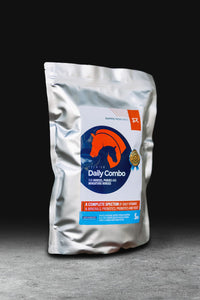
A herbal formula built for metabolic horses
Our bestselling Esprit RELIEF is an all-natural blend of adaptogenic herbs formulated specifically for horses with metabolic and endocrine imbalances. Because it's naturally sugar- and starch-free, it fits an EMS diet perfectly — it supports healthy metabolism and the reduction of abnormal fatty deposits without adding a drop of sugar.
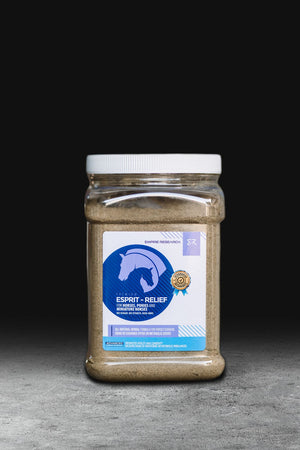
An all-natural, no-sugar, no-starch blend of adaptogenic herbs for horses with metabolic imbalances — supporting healthy metabolism, reduced fatty deposits, and everyday vitality.
Mistakes that make insulin resistance worse
- "He looks fine, a bit of grass won't hurt." For a metabolic horse, unrestricted spring/autumn grass is the number-one laminitis trigger.
- Sweet feed, molasses licks and fruity treats. Hidden sugar undoes careful hay management.
- Crash dieting. Starving a horse can cause other serious problems — aim for steady, controlled weight loss, guided by your vet.
- Ignoring early warning signs — a hardening crest, foot soreness, or "footiness" on hard ground. Act early.
Frequently asked questions
Can insulin resistance in horses be reversed?
Is my horse's cresty neck a sign of EMS?
Should an insulin-resistant horse wear a grazing muzzle?
Can I feed my EMS horse any hard feed at all?
The bottom line
Managing EMS and insulin resistance comes down to three things: get the weight off, keep sugar and starch low (grass included), and support healthy insulin function with the right minerals and a metabolic-focused supplement. Do that — with your vet monitoring insulin — and you protect your horse from laminitis and give them a longer, more comfortable life.
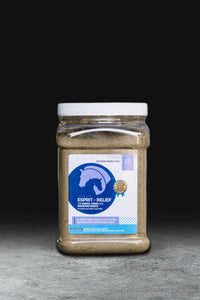
Support your metabolic horse the natural way
Esprit RELIEF — our bestselling, sugar-free herbal formula for horses with metabolic and insulin issues.